
 702-564-6697
When your air conditioner starts acting up, you’re faced with a tough decision: should you invest in another repair or start fresh with a brand-new system? It’s not always an easy choice, but making the right decision can save you money, improve your comfort, and even lower your energy bills. Using programmable thermostats and efficient equipment can help save energy when no one is home during the day, making your cooling replacement decision even more impactful. Here’s how to tell whether it’s better to get AC repair in Las Vegas for your existing system, or to replace it altogether.
Should You Repair or Replace Your AC System?
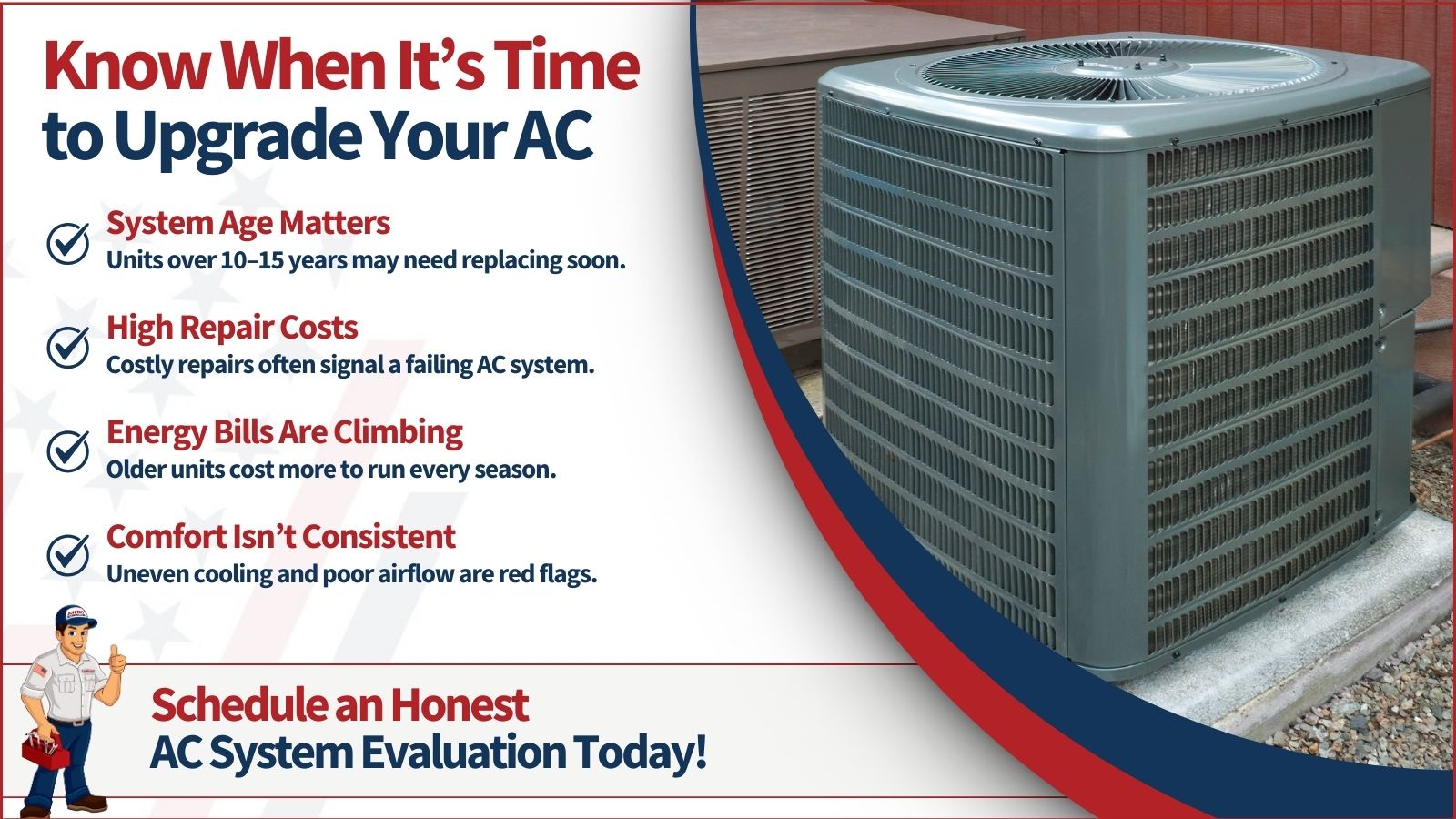
- Consider the system’s age — If your AC or furnace is 10–15 years old and has frequent issues, a replacement may save you more in the long run. Be sure to check the age and warranty status of both your AC and furnace when evaluating your HVAC system.
- Compare repair cost to replacement cost — As a rule: if a repair will cost more than 50% of a new unit, replacing tends to be more economical. Generally, if repair costs are high, replacement is the better option.
- Check your energy bills — Rising bills may signal inefficiency. Newer, high‑efficiency models often reduce energy usage significantly.
- Evaluate comfort and performance — Persistent discomfort (hot/cold spots, humidity, noise) signals that your current AC may no longer be keeping up.
- Frequency & reliability of repairs — If you’re calling for service multiple times a year, recurring costs and downtime may justify replacement.
When considering cooling replacement, remember that heat pumps are an alternative to traditional AC and furnace systems, offering energy-efficient performance and potential cost savings.
Consider the Age of Your AC System
One of the first factors to evaluate is the age of your air conditioner. You can check the manufacturing rating plate or serial number plate on your system to determine its exact age and warranty status. Most AC units are designed to last between 10 to 15 years with proper maintenance. If your system is more than a decade old and is showing signs of wear, it may be time to think about replacement. If your home uses a combined heating and cooling system, consider the age of your furnace as well, since an older furnace may also need replacement or could affect overall HVAC efficiency. Newer models are significantly more energy-efficient, meaning your investment could quickly pay off through lower utility bills.
On the other hand, if your unit is only a few years old and has been relatively trouble-free until now, a repair is likely a better—and much cheaper—solution.
Compare the Cost of AC Repairs vs Replacement
A rule many HVAC professionals use is the “50% rule”: if the cost of repairing your system is more than 50% of the price of a new one, it’s usually better to replace. Expensive repairs, like a failed compressor or leaking coils, can often indicate a recurring problem that suggests your system is nearing the end of its useful life anyway. Identifying such underlying problems, such as inefficiency or frequent breakdowns, can help determine if cooling replacement is the most cost-effective solution. In these cases, investing in a new, warranty-backed system makes much more sense than pouring money into an aging unit.
For smaller, less costly repairs—like a bad capacitor, minor electrical issues, or a worn-out contactor—repairing your current unit is typically a smart move. Having replacement parts in stock can speed up the repair process, sometimes allowing repairs to be completed within hours and minimizing downtime.
When comparing repair and replacement, keep in mind that new systems generally perform better and are more reliable than older ones.
Assess Rising Energy Bills and AC Efficiency
Older air conditioners tend to be much less energy-efficient than modern systems. If you notice that your energy bills have been creeping up, even after normal seasonal fluctuations, your AC might be working harder (and costing more) than it should. Programmable thermostats can help manage energy use during the day when the house is empty, reducing unnecessary cooling and saving on energy costs. Upgrading to a new, high-efficiency unit—or switching to a heat pump—can dramatically cut your cooling costs, especially if your current system is more than 10 years old or has a low SEER (Seasonal Energy Efficiency Ratio) rating.
Consider Comfort Issues and Indoor Air Quality
Is your home consistently cool and comfortable? Or are there hot spots, humidity problems, or persistent dust issues no matter how often you change the filters? Sometimes, certain rooms may be too hot or too cold due to system issues like improper equipment operation, duct problems, or insulation deficiencies. Older systems may struggle to maintain comfort, especially after years of wear. Persistent comfort problems in specific rooms can indicate an underlying problem with your HVAC system, and may signal the need for cooling replacement rather than just repair. New systems offer improved humidity control, quieter operation, and enhanced indoor air quality features that can make a big difference in your overall home environment.
If you find yourself frequently uncomfortable despite regular maintenance, it could be time for an upgrade.
Evaluate How Frequently Your AC Needs Repairs
An occasional repair isn’t anything to worry about. However, if you’re calling your HVAC technician several times a year, those service visits add up quickly—in both costs and inconvenience. Generally, frequent breakdowns are a sign of a larger problem with the system. Repeated breakdowns are a sign that your system is becoming unreliable and may be nearing the end of its lifespan.
Comparing Your AC Repair and Replacement Options
Ultimately, the choice between repairing and replacing your AC system depends on a mix of factors: age, repair costs, energy efficiency, comfort, and reliability. If you’re unsure, it’s always a good idea to schedule an evaluation with a trusted HVAC professional. We can give you an honest assessment of your system’s condition and help you decide the best course of action to keep your home cool and comfortable.
For more information on available offers and detailed guidance, visit our HVAC rebates page or HVAC installation page.
Exploring Alternative AC Systems
When it’s time to replace your AC, it’s worth exploring alternative systems that can provide both heating and cooling for your home. Heat pumps, for example, are becoming increasingly popular due to their ability to deliver optimal performance year-round while keeping energy bills in check. These systems are designed to be highly efficient, reducing overall energy use and minimizing the need for frequent repairs.
Before making a decision, take a close look at the serial number and manufacturing date of your current unit. This information can help you determine whether it’s time for a full replacement or if upgrading certain replacement parts might extend your system’s life. Modern equipment offers a range of options, from high-efficiency air conditioners to advanced heat pumps, each designed to provide reliable performance and lower energy costs.
Access to professional advice is key when comparing different systems. An HVAC expert can help you evaluate which replacement unit will best fit your home’s needs, taking into account factors like system size, energy efficiency ratings, and the availability of replacement parts. By considering all your options and focusing on efficient equipment, you can ensure a smooth transition to a new system that will keep your home comfortable and your energy bills manageable.
Finding a Reliable AC Contractor
Choosing the right AC contractor is just as important as selecting the best system for your home. A reliable contractor will not only help you find the most efficient equipment for your needs but also ensure that your new system is installed for optimal performance and energy savings. Start by researching local contractors, comparing costs, performance reviews, and the range of solutions they provide.
Look for professionals who have permission to work with leading equipment brands and who understand the importance of proper sealing, air flow, and system sizing. The right contractor will assess your home’s unique requirements, recommend efficient options, and provide clear information about replacement parts and ongoing maintenance. This attention to detail helps protect your investment, reduces the risk of future problems, and can save you money on energy bills over time.
Regular maintenance and timely replacement of worn parts are essential for keeping your system running efficiently. By partnering with a qualified contractor, you’ll have access to expert advice, reliable service, and a range of options tailored to your home. Prioritizing energy efficiency and optimal performance not only enhances comfort but also supports a more sustainable and cost-effective living environment for years to come.
Frequently Asked Questions About AC Repair vs Replacement
Question: How old should an AC unit be before considering replacement instead of repair?
Answer: If the unit is over 10‑15 years old and showing multiple signs of wear, replacement is often more cost‑effective. Newer systems are more energy‑efficient and can reduce bills over time.
Question: What is the “50% rule” when deciding between repair and replacement?
Answer: If the cost to repair your existing AC is more than about half the cost of buying a new unit, then replacing usually makes more sense financially and for long‑term reliability.
Question: How do rising energy bills factor into the repair vs replacement decision?
Answer: Older ACs usually have lower efficiency and may raise energy bills significantly. A newer, high efficiency model can reduce electricity costs enough to offset the upfront investment.
Question: What quality‑of‑life issues suggest that replacement is better?
Answer: If your home has trouble staying comfortable—hot spots, humidity issues, persistent dust, or noisy operation—upgrading to a modern system can improve comfort, health, and indoor air quality.
Question: How often should frequent repairs push you toward replacing your AC unit?
Answer: If you find yourself calling for service several times a year, the accumulated cost, hassle, and reduced reliability often justify replacing the system instead of continuous repairs.
Need expert advice? Our HVAC team is here to help you make the right decision for your comfort and budget—just give us a call!
When your HVAC system or plumbing isn’t looking so hot, it’s time to get Johnny On the Spot.